
Peter Tosh’s Legalize It at 50: A Record Bigger Than Its Slogan
Released in 1976, Tosh’s solo debut made cannabis reform part of a larger argument about dignity and power. Its anniversary is a reason to return to the artist—not just the catchphrase.
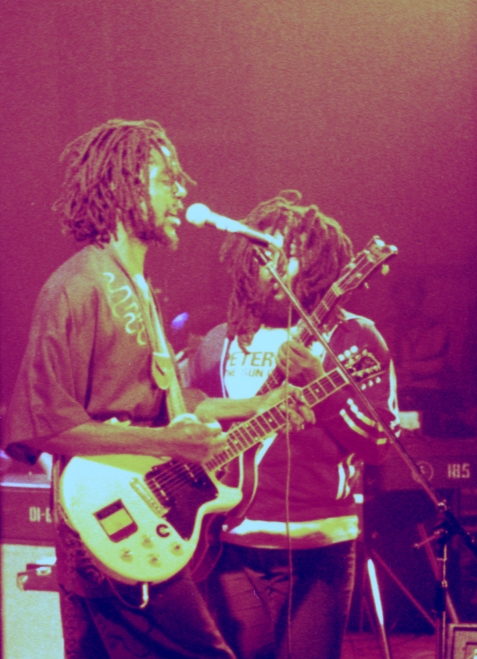

Fifty years after its release, the title of Peter Tosh’s Legalize It still gets to the point before a listener hears a note. Three words, a demand, no elaborate explanation. The risk of such a memorable title is that it can become all we remember.
The record was Tosh’s debut solo album, released in 1976. His official archive presents the title track as a challenge to cannabis prohibition and the album as both music and political commentary. In 2026, that makes the anniversary more than an occasion to repeat a familiar slogan. It is an opportunity to ask what disappears when a complicated artist becomes a single message. Peter Tosh’s official album archive
Before the slogan, a musician
Tosh was born Winston Hubert McIntosh in Westmoreland in 1944. Long before his solo debut, he was part of the Wailers. The National Library of Jamaica records a musician whose contributions included guitar, melodica, piano and organ, as well as songwriting. That range matters: the political voice belonged to a working musician, not a campaign slogan set to a backing track. National Library of Jamaica
It is worth keeping that distinction in mind when revisiting the album. Its nine-track sequence includes “Why Must I Cry,” “Till Your Well Runs Dry” and “Brand New Second Hand” alongside the title song. The official credits identify Bob Marley as a co-writer on “Why Must I Cry” and Bunny Livingston on “Till Your Well Runs Dry.” Even the track list pushes back against reducing Tosh’s solo work to one subject. Official track list
An anniversary can invite a different kind of attention: not simply asking whether the famous track remains recognisable, but whether the rest of the record still gets heard.
Cannabis was part of a wider political argument
The following year brought Equal Rights. Its track list moves through “Get Up, Stand Up,” “African” and “Apartheid.” Read together, the two albums place cannabis reform within a much broader body of work concerned with power, identity and justice. That is an editorial interpretation of the records, not a claim that every song makes the same argument. Equal Rights, official archive
It also changes the question an anniversary feature should ask. Instead of turning Tosh into a mascot for a contemporary product or lifestyle, we can ask what it means to remember an artist who repeatedly challenged the terms on which people were expected to live.
The public recognition came in different forms. Jamaica conferred the Order of Merit on Tosh posthumously in 2012. The national honours ceremony recognised a musician whose work had long made uncomfortable political questions audible. The award is a documented part of his legacy; it does not mean every argument around that legacy has been settled. Jamaica Information Service’s ceremony report

A song is not a statute—or medical evidence
Jamaica’s major cannabis-law amendment came into effect on April 15, 2015, decades after the album. The Ministry of Justice described several distinct aims, including reducing criminal-justice burdens, recognising Rastafari rights and creating a regulated framework. That is not the same thing as declaring every form of cannabis activity lawful. Nor does the timing establish that one musician caused a legislative change. Ministry of Justice’s commencement announcement
Keeping these categories separate does not diminish the music. It lets a song remain a cultural and political statement without making it do the work of legislation, clinical research or an account of every Jamaican’s beliefs. A lyric can tell us what an artist argued. It cannot, on its own, establish a treatment’s safety or effectiveness.
Remember the person, not only the phrase
The most useful way to mark Legalize It at 50 may be to resist the shortcut. Put the musician beside the activist. Put the title track beside the rest of the album. Put the anniversary beside the much longer, unfinished conversation about whose rights receive protection and whose voices get heard.
Tosh does not need to be made uncomplicated to remain relevant. The record is more interesting when he is not.
Editorial disclosure: Cookies Jamaica is a brand-owned publication. Peter Tosh’s official news archive lists a Peter Tosh × Cookies launch at Cookies Melrose in April 2024. This historical feature is not a product announcement and does not imply a current Jamaica collaboration or endorsement. Official news archive